
Architectural Model
Unknown Artist
1st–8th century
Medium
Stone
Dimensions
H. 5 1/16 x W. 2 9/16 in. (12.9 x 6.5 cm)
Classification
Stone-Sculpture
Culture
Mezcala
Department
Arts of Africa, Oceania, and the Americas
Museum
Metropolitan Museum of Art, New York, NY
Credit
Bequest of Arthur M. Bullowa, 1993
Accession Number
1994.35.681
Rights
Public Domain
Tags
Art Historical Context
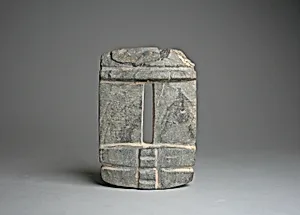
This exquisite stone Architectural Model the Mezcala culture, dating to the 1st–8 century CE, offers a rare glimpse into pre-Columbian Mesoamerican in what is now Guerrero Mexico. Carved from stone and measuring 5 1/16 x 2 9/16 inches, this miniature sculpture likely represents a or ceremonial structure, as suggested by its form and the "Temples" tag. The Mezcala people, active during the Formative to Early Classic periods, were for crafting small, polished stone objects that served ritual, votive, or architectural planning purposes. The model's compact size and durable stone medium highlight the Mezcala's masterful stoneworking techniques, achieved metal tools—relying instead on abrasion and polishing for smooth surfaces and precise details. These artifacts, often found in archaeological contexts, suggest a sophisticated understanding of sacred spaces, possibly used in rituals to invoke divine protection or model future builds. Its presence in the Metropolitan Museum of Art's Department of the Arts of Africa, Oceania, and the Americas, thanks to the 1993 bequest of Arthur M. Bullowa, underscores its value as a cultural treasure bridging ancient spirituality and modern appreciation.