
Architectural Model Based on the Alhambra
19th century (?)
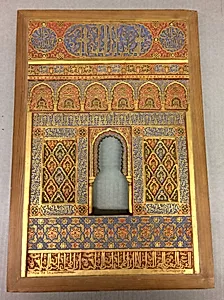
Medium
Plaster colored
Dimensions
H. 16 1/2 in. (41.9 cm) W. 11 5/8 in. (29.5 cm) D. 1 1/8 in. (2.9 cm)
Classification
Reproductions
Department
Islamic Art
Museum
Metropolitan Museum of Art, New York, NY
Credit
Gift of Richard M. Hunt, 1886
Accession Number
86.15.4
Rights
Public Domain
Tags
Art Historical Context
This exquisite plaster model, *Architectural Model Based on Alhambra* by Rafael Contreras, visitors a tactile glimpse into the splendor of Spain's Alhambra palace complex. Created in the 19th century ( 1886), this shallow relief—measuring just 16½ inches high, 11⅝ inches wide, and ⅛ inches deep—reproduces intricate architectural details from the iconic Moorish fortress in Granada Colored plaster enhances its lifelike quality, mimicking the ornate stucco work, arabesques, and muqarnas vaults that define Nasrid Islamic architecture from the 14th century. Contreras, a skilled Spanish artisan, crafted such models during a era of European fascination with Orientalism and Islamic art, bridging medieval Islamic ingenuity with 19th-century preservation efforts. Donated to the Metropolitan Museum of Art in 1886 by Richard M. Hunt, it resides in the Islamic Art department as a classified reproduction, serving as an educational tool before photography fully democratized such wonders. Though diminutive, this piece highlights the Alhambra's cultural legacy as a pinnacle of Hispano-Moorish design, blending geometry, calligraphy, and nature motifs. It invites you to trace the delicate patterns, evoking the Alhambra's poetic courtyards and evoking a sense of timeless wonder.