
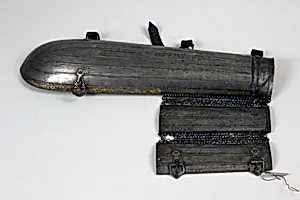
Arm Guard
Unknown Artist
18th century
Medium
Steel, gold
Dimensions
L. 13 1/4 in. (33.7 cm); W. 3 3/4 in. (9.5 cm); Wt. 1 lb. 1.6 oz. (499 g)
Classification
Armor Parts
Culture
Indian
Department
Arms and Armor
Museum
Metropolitan Museum of Art, New York, NY
Credit
Bequest of George C. Stone, 1935
Accession Number
36.25.406
Rights
Public Domain
Art Historical Context
This exquisite 18th-century Indian arm guard crafted from steel and gold, exemplifies the fusion of functionality and opulence in South Asian arms and armor. Measuring 13¼ inches long and weighing just over a pound, it was designed to shield a warrior's forearm during battle, its sturdy steel form providing vital protection while intricate gold elements added a layer of splendor. Housed in the Metropolitan Museum of Art's Arms Armor department, it entered the collection through the bequest of George. Stone in 1935. In the turbulent 18th century, India was a mosaic of powerful empires and regional kingdoms, where warfare demanded both rugged durability and symbols of prestige. Armor pieces like this arm guard were essential for cavalry and infantry, often customized for elite fighters. The use of gold—likely applied through techniques such as koftgari inlay, where fine gold wire is hammered into etched steel—highlighted the wearer's status, transforming a practical defense into a work of art that blended Mughal influences with local craftsmanship. Today, this anonymous masterpiece invites us to ponder the human stories behind the metal: the skilled artisans, the battles fought, and the cultural reverence for beauty amid conflict. A testament to India's rich martial heritage, it reminds visitors that armor was as much about identity and artistry as survival.