
Armchair
Unknown Artist
18th–19th century
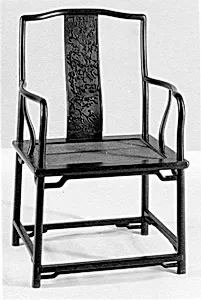
Medium
Purple incense wood
Dimensions
H. 40 1/4 in. (102.2 cm); W. 24 3/8 in. (61.9 cm); D. 18 7/8 in. (47.9 cm)
Classification
Furniture
Culture & Period
China · Qing dynasty (1644–1911)
Department
Asian Art
Museum
Metropolitan Museum of Art, New York, NY
Credit
Bequest of Florance Waterbury, in memory of her father, John I. Waterbury, 1968
Accession Number
68.149.9
Rights
Public Domain
Art Historical Context
This elegant armchair, crafted in China during the Qing dynasty (4–1911), the refined furniture traditions of the 18th–19th centuries. Made from rare purple incense wood—a dense, dark hardwood prized for its rich purple hue, subtle fragrance, and exceptional durability—it stands at 40¼ inches high, with a seat width of 24⅜ inches and depth of ⅞ inches, offering both comfort and imposing presence suitable for elite interiors. Qing furniture like this armchair reflects the era's opulence and technical mastery, where joinery techniques allowed for sturdy, seamless construction without nails, showcasing woodworking prowess. Purple incense wood, often sourced from Southeast Asia, was reserved for imperial or scholarly pieces, symbolizing status and harmony with nature in Confucian culture. Such chairs furnished studies or reception halls, embodying the dynasty's blend of Manchu innovation and Ming elegance. Now at the Metropolitan Museum of Art through the 1968 bequest of Florance Waterbury, this anonymous masterpiece invites us to appreciate the understated luxury of Chinese design—where form, material, and function converge in timeless sophistication.