
Armet
Unknown Artist
17th century
Medium
Steel
Dimensions
H. 14 in. (35.6 cm); W. 9 3/4 in. (24.8 cm); D. 14 in. (35.6 cm); Wt. 7 lb. 10 oz. (3459 g)
Classification
Helmets
Culture
French
Department
Arms and Armor
Museum
Metropolitan Museum of Art, New York, NY
Credit
Gift of William H. Riggs, 1913
Accession Number
14.25.517
Rights
Public Domain
Art Historical Context
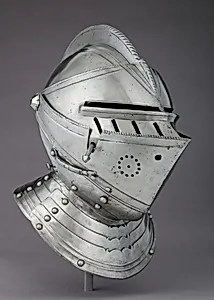
Step into the Arms and Armor gallery and behold this striking 17th-century Frencharmet*, a masterful steel helmet that evokes the thunder of cavalry charges and the grandeur of Europe's Age of Absolutism. Crafted an unknown artisan, its robust form—standing 14 inches high,9¾ inches wide, and inches deep, weighing a hefty 7 pounds ounces—offers a glimpse into the pinnacle of medieval-derived protective gear. The *armet* design, with its close-fitting skullcap, pivoting visor, and hinged cheek guards, provided exceptional head protection while allowing mobility for mounted combatants. By the 17th century, as firearms reshaped warfare under kings like Louis XIV, functional battlefield armor waned, but helmets like this persisted in ceremonial parades, tournaments, and elite guards. This French example highlights the culture's blend of practicality and artistry, where steel was meticulously forged, polished, and often embossed for both defense and display. Donated to the Metropolitan Museum of Art in 1913 by William H. Riggs, it stands as a testament to the enduring legacy of chivalric tradition amid modernity's march. (198 words)