
Armor Design for a Horse
17th century (first half)
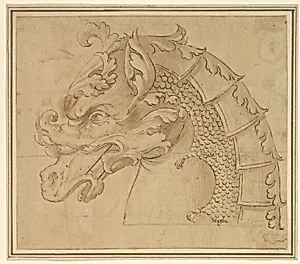
Medium
Brown ink and a light brown wash, pasted onto two sheets of paper, one of support and one as a mount, placed in a modern scrapbook
Dimensions
Sheet: 8 11/16 x 10 1/16 in. (22 x 25.5 cm)
Classification
Drawings
Department
Drawings and Prints
Museum
Metropolitan Museum of Art, New York, NY
Credit
The Elisha Whittelsey Collection, The Elisha Whittelsey Fund, 1950
Accession Number
50.605.9
Rights
Public Domain
Tags
Art Historical Context
This exquisite *Armor Design for a Horse*, crafted by an anonymous Italian artist in the first half of the 17th century, captures the grandeur of Baroque equestrian culture. Rendered in precise brown ink lines accented by subtle light brown wash, the drawing outlines ornate protective barding for a noble steed—likely intended for tournaments, parades, or cavalry display. Measuring just 8⅝ × 10 inches, it was meticulously pasted onto layered paper supports and later preserved in a modern scrapbook, now part of The Elisha Whittelsey Collection at The Metropolitan Museum of Art's Drawings and Prints department. In 17th-century Italy, horses symbolized power, status, and martial prowess among the aristocracy, with armorers collaborating closely with artists to create functional yet lavishly decorated gear. This preparatory sketch exemplifies that synergy, bridging fine art and craftsmanship during the Baroque era's emphasis on drama and movement. The artist's technique—crisp ink for structural details and soft wash for shading and depth—demonstrates masterful control, evoking the three-dimensional gleam of polished metal. Such designs highlight Italy's enduring legacy in equestrian arts, offering visitors a window into the opulent world of Renaissance-to-Baroque workshops.