
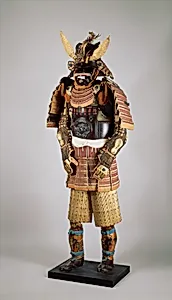
Armor (<i>Gusoku</i>)
16th and 18th centuries
Medium
Iron, lacquer, silk, gilt copper
Dimensions
H. 67 1/2 in. (171.5 cm)
Classification
Armor for Man
Culture
Japanese
Department
Arms and Armor
Museum
Metropolitan Museum of Art, New York, NY
Credit
Gift of Bashford Dean, 1914
Accession Number
14.100.172
Rights
Public Domain
Tags
Art Historical Context
This exquisite *gusoku* (full suit of armor) exemplifies the masterful craftsmanship of two renowned Japanese armor-making lineages: the Myōchin school, represented by Munesuke in the th century, and theotome school, via Ietada in the 18th century. Spanning these eras—from the turbulent Sengoku period of civil wars to the more peaceful Edo era—this composite armor reflects how samurai gear evolved from battlefield functionality to symbols of status and artistry. Standing at an imposing 67½ inches tall, it would have clad a warrior from head to toe, offering both protection and prestige. Crafted from iron plates lacquered for durability and weather resistance, the suit incorporates luxurious silk laces for flexibility, and gilt copper accents for a radiant finish. Dragon motifs, a tag highlighting its decorative flair, evoke imperial power and mythical protection—common in Japanese armor to ward off evil spirits and intimidate foes. The intricate layering and hand-hammered details showcase *tosei-gusoku* techniques, blending utility with aesthetic refinement. A gift to the Metropolitan Museum of Art from collector Bashford Dean in 1914, this *gusoku* invites us to marvel at Japan's arms and armor heritage, where functionality met artistry in the service of the samurai class.