
Armorial jug (boccale)
Unknown Artist
late 15th century
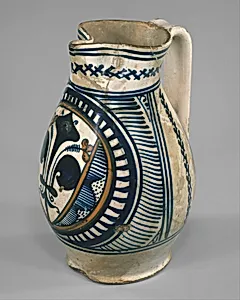
Medium
Maiolica (tin-glazed earthenware)
Dimensions
Height: 9 13/16 in. (25cm)
Classification
Ceramics-Pottery
Culture
Italian, possibly Florence or Faenza
Department
Robert Lehman Collection
Museum
Metropolitan Museum of Art, New York, NY
Credit
Robert Lehman Collection, 1975
Accession Number
1975.1.1069
Rights
Public Domain
Tags
Art Historical Context
This elegant armorial jug, known as a *boccale*, hails from late 15th-century Italy, likely produced in the vibrant ceramic hubs of Florence or Faenza Crafted from maiolica—tin-glazed earthenware—this 9 13/16-inch (25 cm) vessel exemplifies the Renaissance mastery of pottery. The tin glaze created a smooth, white surface ideal for vibrant painted decorations, including a prominent coat of arms that would have signified family prestige, alliance, or patronage. Maiolica flourished in Italy during this period, blending Islamic glazing techniques with local artistic flair. Workshops in Faenza and Florence pioneered colorful, narrative designs on everyday objects like jugs, transforming functional items into status symbols. Boccali like this one were used for serving wine or ale at feasts, their sturdy forms and glossy finishes making them both practical and prized. Now part of the Robert Lehman Collection at The Metropolitan Museum of Art (1975), this anonymous masterpiece offers a glimpse into Renaissance domestic luxury. Its heraldic motif hints at the era's emphasis on lineage and identity, reminding us how ceramics captured the social fabric of medieval Italy.