
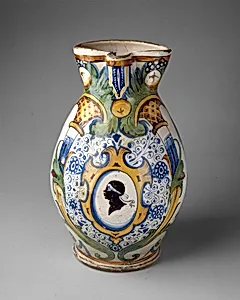
Armorial Jug (boccale)
Unknown Artist
ca. 1570–80
Medium
Maiolica (tin-glazed earthenware)
Dimensions
H. 15 3/16 in. (38.5 cm)
Classification
Ceramics-Pottery
Culture
Italian, Montelupo
Department
Robert Lehman Collection
Museum
Metropolitan Museum of Art, New York, NY
Credit
Robert Lehman Collection, 1975
Accession Number
1975.1.1010
Rights
Public Domain
Tags
Art Historical Context
This elegant Armorial Jug, or *boccale*, hails from Montelupo, Italy, around 1570–80, a thriving hub of Renaissance ceramics production in Tuscany. Standing at 15 3/16 inches tall, this tin-glazed earthenware piece exemplifies maiolica, a technique where a tin oxide glaze creates a brilliant white surface ideal for vibrant painted decorations. Montelupo workshops were renowned for such vessels, blending functionality with artistry to produce table for affluent households. The jug's standout feature is its coat of arms, a heraldic emblem signaling its commission for a noble family or prominent individual. These armorial designs were a mark of prestige, transforming everyday objects like drinking jugs into symbols of status and lineage. Maiolica's durability and luminous colors made it a staple of Italian Renaissance dining, bridging utilitarian craft with the era's love for opulent display. Today, housed in the Robert Lehman Collection at The Metropolitan Museum of Art, this anonymous masterpiece offers a glimpse into 16th-century Italian life, where pottery artistry rivaled painting and sculpture in sophistication.