
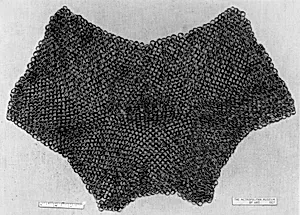
Armpit Defense
Unknown Artist
16th century
Medium
Steel
Dimensions
H. 9 7/16 in. (24.0 cm); W. 11 13/16 in. (30.0 cm); Diam. (outside) of riveted links 13/32 in. (11.1 mm); Diam. (inside) of riveted links 5/16 in. (8.0 mm); Diam. of solid links 9/32 in. (10.0 mm); Wt. 1 lb. 3 oz. (538.6 g).
Classification
Culture
German
Department
Arms and Armor
Museum
Metropolitan Museum of Art, New York, NY
Credit
Gift of Prince Albrecht Radziwill, 1927
Accession Number
27.183.32
Rights
Public Domain
Art Historical Context
Nestled in the Metropolitan Museum of Art's Arms Armor collection, this "Armpit Defense" a exquisite example of 16th-century mail armor, crafted from steel by an unknown master armorer. Dating to a time when German knights and Landsknecht mercenaries dominated European battlefields, such pieces protected vulnerable joints like the armpit—where rigid plate armor left gaps for mobility. Gifted by Prince Albrecht Radziwill 1927, it the fusion of function and fine craftsmanship during the Renaissance peak of armor production. Made of interlocking riveted and solid steel rings, the defense measures just 9 7/16 inches high and 11 13/16 inches wide, weighing a mere 1 lb. 3 oz. for agile wear. The rings' precise diameters—13/32 inch outside for riveted links, down to 9/32 inch for solids—highlight advanced metallurgical techniques, ensuring flexibility without sacrificing defense against slashes and thrusts. This lightweight mail, worn under or over plates, allowed warriors to maneuver swords or polearms effectively. Culturally, it reflects Germany's renown for innovative armor, blending medieval chainmail traditions with emerging plate designs. Imagine a soldier in full harness, this subtle guard safeguarding a deadly weak spot— a testament to the armorer's ingenuity and the brutal realities of Renaissance warfare.