
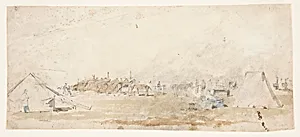
Army Encampment
Medium
landscapes
Classification
landscapes
Department
Smithsonian Collection
Museum
Smithsonian American Art Museum
Credit
Gift of Charles Savage Homer, Jr.
Accession Number
1912-12-122
Rights
Public Domain
About this artwork
Research in Progress
Art Historical Context
**Army Encampment** (1862) by Winslow captures a poignant moment from the American Civil War, a conflict that profoundly shaped the artist's early career. Created during the war's second year, this landscape depicts soldiers in a makeshift camp, reflecting Homer's firsthand observations as a visual correspondent for *Harper's Weekly*. At age 26, Homer sketched directly from life at the front lines, bringing raw authenticity to his scenes of Union troops amid the Virginia countryside. The work embodies the gritty realism that would define his legacy, bridging romanticism and modernism in American art. Homer's landscapes, like this one, often integrate human figures into vast natural settings, emphasizing isolation and endurance. Classified within the Smithsonian American Art Museum's landscapes collection, it highlights his mastery of light, atmosphere, and composition—techniques honed through printmaking and oil painting. Though specific details of its medium remain under research, the piece underscores Homer's shift toward unvarnished depictions of war's human toll, influencing later generations of realist painters. A cherished gift from Homer's brother, Charles Savage Homer, Jr., to the Smithsonian Collection, *Army Encampment* invites visitors to reflect on the war's everyday realities. Ongoing research promises deeper insights into this foundational work. (198 words)