
Arrowhead (<i>Yanone</i>)
Unknown Artist
dated 1645
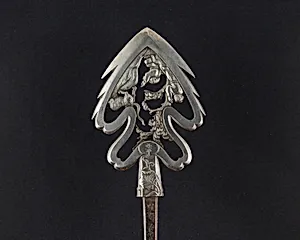
Medium
Steel
Dimensions
L. 10 3/4 in. (27.3 cm); L. of head 4 in. (10.2 cm); W. 2 5/8 in. (6.7 cm); Wt. 4.8 oz. (136.1 g)
Classification
Archery Equipment-Arrowheads
Culture
Japanese
Department
Arms and Armor
Museum
Metropolitan Museum of Art, New York, NY
Credit
The Collection of Giovanni P. Morosini, presented by his daughter Giulia, 1932
Accession Number
32.75.401
Rights
Public Domain
Tags
About this artwork
Arrowhead (<i>Yanone</i>) is a archery equipment-arrowheads from Japanese, dated to dated 1645. The work was created using steel. It measures L. 10 3/4 in. (27.3 cm); L. of head 4 in. (10.2 cm); W. 2 5/8 in. (6.7 cm); Wt. 4.8 oz. (136.1 g). This piece represents the artistic traditions of Japanese, embodying the aesthetic values and technical expertise of its makers. This work exemplifies the artistic achievements of its period and cultural context. The creation of such objects required speciali...
Art Historical Context
This exquisite steel arrowhead, known as *yanone*, hails from Japan in 1645, during the early Edo period—a time of relative peace under the Tokugawa shogunate when samurai culture emphasized refined craftsmanship in arms and armor. Measuring a slender 10¾ inches long, with a 4-inch head and weighing just 4.8 ounces, it exemplifies the precision engineering required for kyudo (Japanese archery), a martial art intertwined with Zen philosophy and spiritual discipline. Crafted from high-quality steel, the *yanone* showcases the technical mastery of anonymous Japanese artisans, whose skills were honed through generations. Its form, potentially adorned with motifs of animals and men as suggested by traditional designs, blends lethal functionality with aesthetic elegance, reflecting Japan's wabi-sabi appreciation for imperfection and utility in weaponry. Acquired through the Collection of Giovanni P. Morosini and presented to the Metropolitan Museum of Art by his daughter Giulia in 1932, this piece resides in the Arms and Armor department. It offers visitors a tangible glimpse into Japan's warrior heritage, where even tools of war embodied artistic excellence.