
Ceremonial Arrowhead (<i>Yanone</i>)
dated 1645
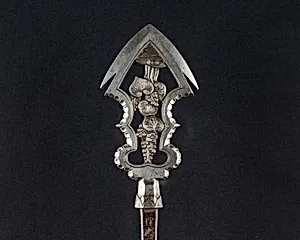
Medium
Steel
Dimensions
L. 11 3/4 in. (29.9 cm); L. of head 3 7/8 in. (9.8 cm); W. 2 1/8 in. (5.4 cm); Wt. 4.3 oz. (121.9 g)
Classification
Archery Equipment-Arrowheads
Culture
Japanese
Department
Arms and Armor
Museum
Metropolitan Museum of Art, New York, NY
Credit
The Collection of Giovanni P. Morosini, presented by his daughter Giulia, 1932
Accession Number
32.75.339
Rights
Public Domain
Art Historical Context
Behold the *Ceremonial ArrowheadYanone)*, a masterful steel creation by Umetada Motige, dated 1645. Measuring nearly 12 inches in total length with a broad 3 7/8-inch head, this exquisite piece weighs just 4.3 ounces, balancing form and function in Japanese archery equipment. Housed in the Metropolitan Museum of Art's Arms and Armor Department, it entered the collection in 1932 through the generous gift of Giovanni P. Morosini via his daughter Giulia. Crafted during Japan's Edo period, this *yanone* exemplifies the artistry of ceremonial arrowheads, prized more for their ornamental beauty than battlefield utility. Umetada Motoshige, from a renowned lineage of metalworkers, forged the steel with precision, showcasing the intricate hammering and polishing techniques central to Japanese bladesmithing. These arrowheads often featured in rituals, archery contests, or as status symbols among samurai, blending martial tradition with aesthetic refinement. Today, this artifact illuminates the cultural reverence for kyūdō (Japanese archery) as a meditative and philosophical practice. Its survival highlights the enduring legacy of 17th-century craftsmanship, inviting us to appreciate how even weapons could embody elegance and spiritual harmony.