
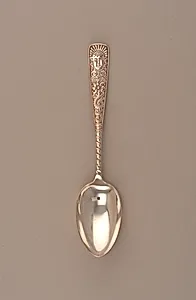
"Assyrian Head" Pattern Table Spoon
Classification
cutlery
Department
Smithsonian Collection
Museum
Smithsonian American Art Museum
Credit
Museum purchase from Decorative Arts Association Acquisition Fund
Accession Number
1995-148-9
Rights
Public Domain
About this artwork
Research in Progress
Art Historical Context
In the late 19th century, Meriden Silver Plate Company of Connecticut was a powerhouse in American manufacturing, producing affordable silver-plated flatware that brought elegance to middle-class dining tables. Crafted between 1885 and 1886, this "Assyrian Head" Table Spoon exemplifies the era's fascination with historicism and exoticism. The company's electroplating process—pioneered in the 1840s—allowed intricate designs to be mass-produced, transforming everyday cutlery into miniature works of art. The spoon's namesake pattern draws inspiration from ancient Assyrian motifs, likely evoking the majestic stone reliefs of winged bulls and bearded kings from Mesopotamia (circa 900–612 BCE). Popular during the Victorian Aesthetic Movement, such Orientalist designs blended archaeological revival with Gilded Age opulence, reflecting America's growing cultural curiosity fueled by museum exhibitions and world's fairs. Though the exact medium remains under study, silver-plated spoons like this were prized for their durability and shine. Acquired through the Smithsonian American Art Museum's Decorative Arts Association Acquisition Fund, this piece highlights the artistry of industrial design. It reminds visitors how 19th-century innovators democratized luxury, turning a simple utensil into a conversation starter about global heritage and American ingenuity. (198 words)