
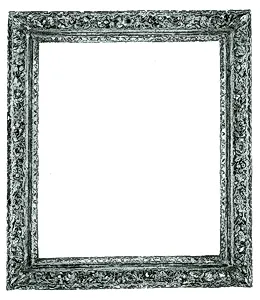
Astragal frame
Unknown Artist
1640–50
Medium
Oak
Dimensions
Overall: 20 11/16 × 18 3/8 in. (52.5 × 46.6 cm) Sight: 15 7/8 × 13 9/16 in. (40.3 × 34.4 cm) Rabbet: 16 9/16 × 14 1/8 in. (42 × 35.8 cm)
Classification
Frames
Culture
French
Department
Robert Lehman Collection
Museum
Metropolitan Museum of Art, New York, NY
Credit
Robert Lehman Collection, 1975
Accession Number
1975.1.2347
Rights
Public Domain
Art Historical Context
Welcome to the Robert Lehman Collection at The Metropolitan Museum of Art, where this exquisite **Astragal frame** from mid-17th-century France (1640–50) captures the elegance of Baroque-era decorative arts. Crafted from sturdy oak by an unknown artisan, this frame measures 20 11/16 × 18 3/8 inches overall, designed to encase a painting with a sight size of 15 7/8 × 13 9/16 inches. Its name derives from the "astragal" molding—a subtle, bead-like convex profile that adds rhythmic depth and sophistication, a hallmark of French frame-making during the reign of Louis XIII. Oak's durability made it ideal for intricate carving and gilding techniques prevalent in the period, allowing frames to complement opulent interiors and elevate paintings of portraits or religious scenes. These frames weren't mere supports; they were architectural jewels, reflecting the era's shift toward balanced Classicism amid Baroque exuberance. Acquired in 1975, this frame exemplifies the refined craftsmanship of French workshops, offering visitors a tangible link to 17th-century domestic splendor. Gaze closely at its precise rabbet dimensions (16 9/16 × 14 1/8 inches) to appreciate how it cradled artworks with precision, preserving their visual impact for generations.