
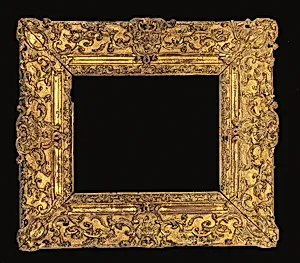
Ogee frame
Unknown Artist
ca.1690
Medium
Oak
Dimensions
Overall: 14 × 15 13/16 in. (35.5 × 40.1 cm) Sight: 7 3/16 × 8 15/16 in. (18.2 × 22.7 cm) Rabbet: 8 × 9 13/16 in. (20.3 × 25 cm)
Classification
Frames
Culture
French
Department
Robert Lehman Collection
Museum
Metropolitan Museum of Art, New York, NY
Credit
Robert Lehman Collection, 1975
Accession Number
1975.1.2273
Rights
Public Domain
Art Historical Context
This oak ogee frame, crafted 1690 by an French artist, highlights the sophisticated woodworking traditions of late-17th-century Europe The “ogee” profile—an elegant S-shaped curve combining convex and concave forms—was a favored molding style of the era, designed to catch and play with light while creating a sense of depth around the artwork it enclosed. Made from durable oak, the frame’s modest overall size (about 14 by 16 inches) suggests it was intended for a small painting, drawing, or print. In France during the reign of Louis XIV, frames were regarded as essential companions to paintings rather than mere borders. They often reflected the grandeur of Baroque taste and helped integrate pictures into richly decorated interiors. Although this particular example remains unsigned and its original finish is unknown, it stands as a quiet testament to the anonymous artisans whose skill elevated everyday objects into works of art in their own right. Now part of the Robert Lehman Collection at the Metropolitan Museum of Art, the frame invites visitors to consider how such objects shaped the way art was displayed and experienced centuries ago. Its precise construction and classic profile continue to demonstrate the lasting importance of framing in the history of collecting and presentation.