
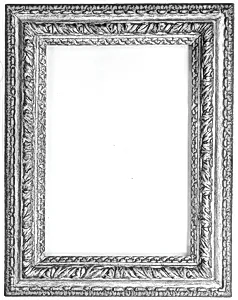
Astragal frame
Unknown Artist
mid-17th century
Medium
Poplar
Dimensions
Overall: 21 1/4 × 27 3/4 in. (54 × 70.5 cm) Sight: 13 3/8 × 19 7/8 in. (34 × 50.5 cm) Rabbet: 14 3/4 × 21 1/16 in. (37.5 × 53.5 cm)
Classification
Frames
Culture
Italian, Veneto
Department
Robert Lehman Collection
Museum
Metropolitan Museum of Art, New York, NY
Credit
Robert Lehman Collection, 1975
Accession Number
1975.1.2328
Rights
Public Domain
Art Historical Context
Welcome to the Robert Lehman Collection at The Metropolitan Museum of Art, we showcase exquisite examples of European decorative arts. The *Astragal Frame*, crafted in the mid-17th century from poplar wood by an unknown Venetian artisan, exemplifies the refined frame-making traditions of Italy's Veneto region. Measuring 21¼ × 27¾ inches overall, with a sight size of 13⅜ × 19⅞ inches, this frame features the characteristic astragal molding—a subtle, convex beaded profile that adds elegance and depth. Poplar, a lightweight and workable hardwood, was a favored choice for such pieces, allowing carvers to achieve intricate details while keeping the structure sturdy. In the Baroque era, frames like this were far more than mere supports; they were integral to the presentation of paintings, enhancing their dramatic effect in opulent palazzi and churches. Veneto's frame workshops, centered in Venice, produced these astragals for masterpieces by artists like Titian and Veronese, blending functionality with sculptural beauty. The rabbet dimensions (14¾ × 21¹⁄₁₆ inches) indicate precise engineering to securely hold canvases, reflecting the period's advanced woodworking techniques. This frame, acquired in 1975, invites us to appreciate the unsung artistry of frame makers—true collaborators in the visual storytelling of Italian Renaissance and Baroque painting. A testament to Veneto's cultural legacy, it reminds visitors how every element of a composition contributes to its timeless allure.