
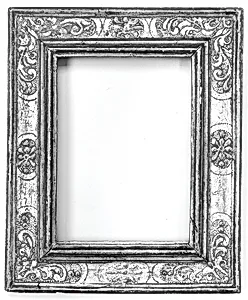
Cassetta frame
Unknown Artist
early 17th century
Medium
Poplar
Dimensions
Overall: 13 × 10 11/16 in. (33 × 27.1 cm) Sight: 8 3/8 × 6 in. (21.3 × 15.2 cm) Rabbet: 8 7/8 × 6 1/2 in. (22.6 × 16.5 cm)
Classification
Frames
Culture
Italian, Veneto or Marches
Department
Robert Lehman Collection
Museum
Metropolitan Museum of Art, New York, NY
Credit
Robert Lehman Collection, 1975
Accession Number
1975.1.2527
Rights
Public Domain
Art Historical Context
This elegant cassetta frame, crafted in the early seventeenth century from poplar wood, originates from the Veneto or Marches regions of Italy. Cassetta frames, named for their “little box” design, feature a flat central frieze bordered by raised moldings, creating a simple yet refined structure that highlights the artwork it encloses. During this period, such frames were essential companions to paintings, serving both to protect delicate works and to enhance their visual impact within private collections or church settings. Poplar was a favored material for Italian frames because of its light weight and fine grain, which allowed artisans to carve subtle decorative details with precision. Though the maker remains unknown, the frame’s modest yet sophisticated proportions—measuring just over thirteen inches tall—suggest it was designed for a small devotional image or portrait, reflecting the intimate scale popular in domestic interiors of the time. Today, this frame resides in the Metropolitan Museum of Art’s Robert Lehman Collection, where it stands as a testament to the skilled craftsmanship that elevated framing to an art form in its own right.