
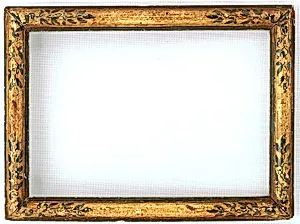
Astragal mirror frame
Unknown Artist
18th century
Medium
Poplar
Dimensions
Overall: 9 5/8 × 12 15/16 in. (24.4 × 32.8 cm) Sight: 7 5/16 × 10 11/16 in. (18.6 × 27.1 cm) Rabbet: 7 13/16 × 11 1/4 in. (19.8 × 28.6 cm)
Classification
Frames
Culture
Italian, Genoa
Department
Robert Lehman Collection
Museum
Metropolitan Museum of Art, New York, NY
Credit
Robert Lehman Collection, 1975
Accession Number
1975.1.2205
Rights
Public Domain
Art Historical Context
Welcome to the Metropolitan Museum of Art's Robert Lehman Collection, where exquisite **Astragal Mirror Frame** from 18th-century Genoa,, captures the elegance of Italian craftsmanship. Crafted from poplar wood by an unknown artist, the measures 9 5/8 × 12 15/16 inches overall, with a sight opening of 7 5/ × 10 11/16 inches—ideal a decorative tabletop or wall mirror. The "astragal" refers to its distinctive beaded or rounded moldings, a refined motif that added subtle texture and light play to period interiors. In Genoa, a thriving maritime hub during the 18th century, woodworkers excelled in ornate frames that complemented lavish homes and palaces. Poplar, lightweight yet carvable, was a practical choice for intricate detailing, allowing for the frame's precise rabbet (7 13/16 × 11 1/4 inches) to securely hold glass. These frames were not mere supports but artistic statements, reflecting Genoa's blend of Baroque exuberance and emerging Rococo grace. Today, this piece highlights the unsung artistry of frame-makers, whose work framed masterpieces by luminaries like Tiepolo. Donated in 1975, it invites us to appreciate how everyday objects embodied cultural prestige and technical mastery.