
Avondschemering
1840 - 1867
Medium
oil on canvas
Dimensions
63.4; 3.7; 42.3; 102
Rights
Public Domain
About this artwork
Gift of the heirs of W.J. van Randwijk, The Hague
Art Historical Context
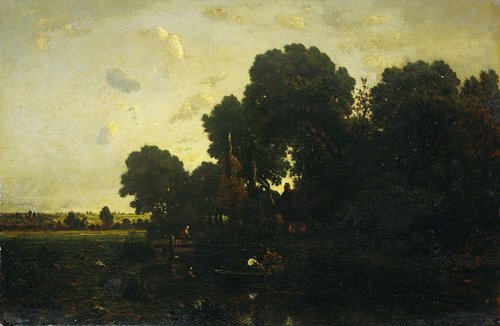
**AvondschemeringTwilight)** by Théodore Rousseau invites visitors into the serene hush of a fading day. Painted in oil on canvas between 184 and 1867, this intimate landscape measures 42.3 x 63.4 cm, capturing the subtle magic of dusk. Rousseau, a leading figure of the Barbizon School—a group of 19th-century French artists who rejected studio idealization for direct observation of nature—excelled in evoking the atmosphere of the Forest of Fontainebleau, though this work's Dutch title hints at its appeal in the Netherlands. Rousseau's technique shines in his layered application of oil, building rich textures to convey the softening light and deepening shadows of twilight. As a pioneer bridging Romanticism and Realism, he influenced Impressionists like Monet by prioritizing natural effects over dramatic compositions. This prolonged creation period reflects his meticulous process, refining the scene over decades until his death in 1867. Generously gifted to the Rijksmuseum by the heirs of W.J. van Randwijk from The Hague, *Avondschemering* bridges French innovation with Dutch appreciation for landscape mastery. Pause before it to feel the day's quiet surrender to night—a timeless reminder of nature's gentle poetry.
About the Artist
Théodore Rousseau · 1812–1867
Théodore Rousseau (1812–1867) was a French landscape painter and the leading figure of the Barbizon School, the group of artists who settled in the village of Barbizon near the Forest of Fontainebleau to paint directly from nature. Born in Paris, he showed precocious talent and studied under the academic painters Charles Rémond and Guillaume Guillon-Lethière, but quickly rejected classical landsca...