
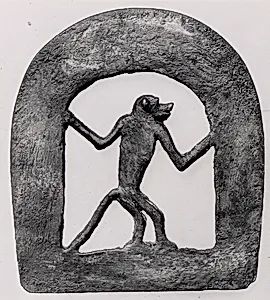
Ax head with cynocephalus
Unknown Artist
ca. 2100–1650 B.C.
Medium
Bronze or copper alloy
Dimensions
H. 9 × W. 8 cm (3 9/16 × 3 1/8 in.)
Classification
Ax head with cynocephalus
Period
First Intermediate Period–Middle Kingdom
Department
Egyptian Art
Museum
Metropolitan Museum of Art, New York, NY
Credit
Rogers Fund, 1925
Accession Number
25.2.15
Rights
Public Domain
Art Historical Context
This bronze or copper alloy ax head, to around 2100–1650 B.C., hails from Egypt's First Intermediate Period through the Middle Kingdom (Dyn 12–18). just 9 cm high and 8 cm wide, it's a compact yet striking artifact, likely both functional for combat or ceremony and symbolically potent. Crafted during a time of political fragmentation and renewal, it reflects the era's advances in metalworking, as Egyptian artisans mastered casting alloys for durable weapons and elite tools. The standout feature is its cynocephalus—a dog-headed baboon figure sacred in ancient Egyptian religion, often linked to the god Thoth, deity of wisdom, writing, and the moon. Perched atop the blade, this mythical creature imbued the ax with protective and divine power, blending martial utility with spiritual symbolism. Such decorated axes were status symbols for warriors or officials, highlighting the culture's fusion of everyday objects with cosmology. On display in the Metropolitan Museum of Art's Egyptian Art department (acquired via Rogers Fund, 1925), this piece offers a window into Middle Bronze Age craftsmanship, where form met function in service of the gods and kings.