
Ba amulet
Unknown Artist
664–332 B.C.
Medium
Lapis lazuli
Dimensions
H. 3/4 in.
Classification
Amulet, ba
Period
Late Period
Department
Egyptian Art
Museum
Metropolitan Museum of Art, New York, NY
Credit
Gift of Helen Miller Gould, 1910
Accession Number
10.130.2087
Rights
Public Domain
Art Historical Context
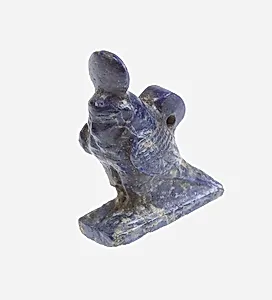
This exquisite *Ba amulet*, carved vibrant lapis lazuli during's Late Period (664–332 B.C., Dynasties 26–), captures the mystical essence of ancient Egyptian beliefs about the soul. Standing just 3/4 inch tall, it depicts the *ba*—a human-headed bird symbolizing one of the five parts of the soul, which could separate from the body to journey between the earthly realm and the afterlife. Such small amulets were potent protective charms, often placed on mummies or worn by the living to safeguard the spirit's freedom and mobility. Crafted from precious lapis lazuli, a deep blue stone imported from distant Afghanistan and revered for its celestial hue evoking the night sky and divine power, the amulet exemplifies Late Period artistry. Artisans skillfully carved the hard stone into intricate forms, highlighting Egypt's enduring mastery of lapidary techniques amid a era of political fragmentation and cultural revival. These objects bridged daily life and eternity, embodying hopes for resurrection. A generous gift from Helen Miller Gould in 1910, this treasure resides in the Metropolitan Museum of Art's Egyptian Art Department, inviting visitors to ponder the ancient Egyptians' profound views on immortality.