
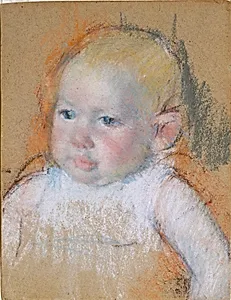
Baby Charles
Classification
Drawing
Department
Smithsonian Collection
Museum
Smithsonian American Art Museum
Credit
Hirshhorn Museum and Sculpture Garden, Smithsonian Institution, Washington, DC, Gift of the Joseph H. Hirshhorn Foundation, 1966
Accession Number
66.846
Rights
Public Domain
About this artwork
The Artist; JH purchased from Hirschl & Adler Galleries, New York 1959
Art Historical Context
Mary Cassatt’s “Baby Charles,” created around 1900, captures the tender intimacy that defined much of her later career. An American artist who spent most of her adult life in France, Cassatt became one of the few women to exhibit with the Impressionists. Her drawings and prints frequently explored the quiet bonds between mothers and children, offering a modern, empathetic view of domestic life at a time when such subjects were often dismissed as sentimental. Classified simply as a drawing, the work reflects Cassatt’s interest in line and form rather than elaborate finish. By the turn of the century she had largely turned from large oil paintings to more intimate works on paper, allowing her to record fleeting expressions with directness and warmth. “Baby Charles” continues this focus, presenting childhood as both ordinary and worthy of serious artistic attention. Acquired by the Hirshhorn Museum through the Joseph H. Hirshhorn Foundation, the piece now resides in the Smithsonian’s American art holdings. It offers visitors a glimpse of Cassatt’s sensitive draftsmanship and her enduring commitment to portraying the everyday world of women and children with dignity and insight.