
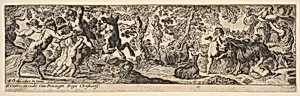
Bacchanal
1615–42
Medium
Etching
Dimensions
Sheet: 2 3/4 x 9 1/8 in. (7 x 23.2cm)
Classification
Prints
Department
Drawings and Prints
Museum
Metropolitan Museum of Art, New York, NY
Credit
Harris Brisbane Dick Fund, 1928
Accession Number
28.91.20
Rights
Public Domain
Tags
Art Historical Context
Pierre Brebiette'sBacchanal*, an created between 1615 1642, captures wild exuberance of a mythological revelry. This intimate print, measuring just 2¾ x 9⅛ inches, depicts frolicsome figures including Cupid, satyrs, and rams—evoking the ecstatic rites of Bacchus, the Roman god of wine. Brebiette, a French artist active in the early 17 century, drew from Mannerist traditions, blending graceful forms with playful grotesquerie in a horizontal composition ideal for etching's delicate lines. Etching, Brebiette's chosen medium, allowed for fluid, expressive strokes etched into a metal plate with acid, producing rich tonal variations and intricate details unachievable in earlier engraving techniques. This print exemplifies the era's booming print culture in Europe, where affordable reproductions spread mythological themes to a wider audience beyond elite patrons. Housed in the Metropolitan Museum of Art's Drawings and Prints department, acquired via the Harris Brisbane Dick Fund in 1928, it reflects the museum's commitment to preserving masterful 17th-century graphics. Delight in its compact energy: a tiny window into Baroque-era fantasies of abandon, where satyrs chase delight amid rams and Cupid's arrows, reminding us of art's power to evoke timeless revelry.
About the Artist
Pierre Brebiette · 1598–1642
Pierre Brébiette (c. 1598–c. 1642) was a French painter and etcher whose elegant, sensuous treatment of classical mythology and allegory earned him a significant reputation in early seventeenth-century Paris. Born in Mantes-sur-Seine, Brébiette traveled to Italy as a young man and lived and worked in Rome from around 1617 to approximately 1625, absorbing the influences of ancient sculpture, Renais...