
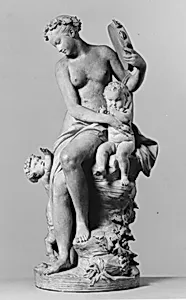
Bacchante
19th century (?), after a model of 1774
Medium
Terracotta
Dimensions
Height: 23 7/8 in. (60.6 cm)
Classification
Sculpture
Culture
French
Department
European Sculpture and Decorative Arts
Museum
Metropolitan Museum of Art, New York, NY
Credit
Bequest of Caroline Lucy Morgan, in memory of her parents, 1942
Accession Number
42.38.1
Rights
Public Domain
Tags
Art Historical Context
Augustin Pajou's *Bacchante*, a captivating terracotta sculpture from the19th century (modeled originally in 1774), the exuberant spirit of classical mythology. This nearly two-foot-tall figure ( 7/8 inches high) depicts a follower of Bacchus, the god of wine and revel, rendered in the soft, warm tones of terracotta—a medium favored by sculptors for its versatility in creating detailed models and bozzetti, or preparatory sketches in clay. Pajou, a leading French Neoclassical artist of the late 18th century, drew inspiration from ancient Greco-Roman ideals, blending graceful anatomy with lively expression to evoke the bacchante's joyful abandon. The sculpture's tags hint at its dynamic details: musical instruments, perhaps a tambourine or cymbals, clutched in her hands, alongside childlike figures that suggest a maternal or ritualistic scene amid the Dionysian festivities. Terracotta's earthy texture allowed Pajou to capture fluid drapery and energetic movement, techniques that influenced his grand marble works for French royalty, like those at Versailles. This piece, now in the Metropolitan Museum of Art's European Sculpture and Decorative Arts collection (bequest of Caroline Lucy Morgan, 1942), offers a window into 18th-century France's revival of antiquity, celebrating themes of music, dance, and uninhibited joy that resonated in Rococo-to-Neoclassical transitions. Visitors will appreciate how Pajou's *Bacchante* bridges intimate studio practice with mythic grandeur, inviting us to revel in art's playful side.
About the Artist
Augustin Pajou · 1730–1809
Augustin Pajou (1730–1809) was one of the foremost French sculptors of the second half of the eighteenth century, whose long and distinguished career bridged the Rococo grace of the Ancien Régime and the more sober classicizing spirit that emerged in the revolutionary and Napoleonic periods. Born in Paris into a family with artistic connections — his father was an ornamental sculptor — Pajou showe...