
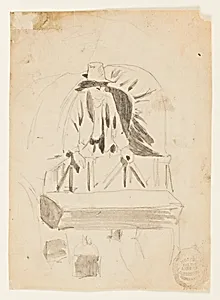
Back of an Army Wagon
Medium
figures
Classification
figures
Department
Smithsonian Collection
Museum
Smithsonian American Art Museum
Credit
Gift of Charles Savage Homer, Jr.
Accession Number
1912-12-145-a
Rights
Public Domain
About this artwork
Research in Progress
Art Historical Context
**Back of an Army Wagon *Winslow Homer (American, 18361910), 1862 Gift of Charles Savage Homer, Jr., Smithsonian American Art Museum Created in 1862 amid the American Civil War, Homer's *Back of an Army Wagon captures a poignant slice of wartime life. Homer, then a young artist and illustrator for *Harper's Weekly*, embedded with Union troops, sketching the raw realities of soldiers' existence. This work, classified among his figure studies, likely depicts the weary figures at the rear of a supply wagon—a common sight on muddy marches through Virginia battlefields—highlighting the human toll of conflict rather than glory. Homer's early style, rooted in Realism, emphasized unvarnished truth over romanticism, using quick, expressive lines in drawings like this to convey motion, fatigue, and camaraderie. As one of his Civil War sketches, it reflects his pivotal shift from commercial illustration to fine art, influencing later masterpieces like *The Veteran*. Though research continues, its focus on ordinary soldiers underscores Homer's empathy for the common man. This intimate study, donated by the artist's family, invites us to ponder the war's everyday grit, reminding visitors of art's power to humanize history. (178 words)