
Balcony Balustrade Designs
late 18th century
Classification
Department
Smithsonian Collection
Museum
Smithsonian American Art Museum
Credit
Purchased for the Museum by the Advisory Council
Accession Number
1921-6-427-11
Rights
Public Domain
About this artwork
Research in Progress
Art Historical Context
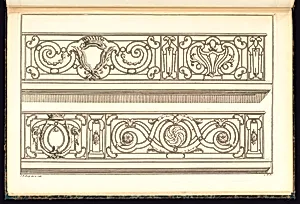
Step into the elegant world of late 18-century design with *Balcony Balustrade* by Jean François Forty, artist active between 1775 and 1790. This print, housed in the Smithsonian American Art's collection, showcases intricate architectural motifs for balcony railings—those graceful barriers that adorned grand European and early American homes. Purchased for the museum by the Advisory Council, exemplifies the period's fascination with ornamentation, bridging functionality and beauty in urban facades. Created during the tail end of the Rococo era and the rise of Neoclassicism, Forty's work reflects a time when printed designs democratized sophisticated architecture. Prints like this served as blueprints for artisans, allowing builders from Paris salons to Philadelphia rowhouses to replicate ornate balustrades with scrolling ironwork or stone carvings. Though the exact medium remains under study, such engravings or etchings were vital tools for spreading stylistic innovations across continents. This piece invites us to appreciate how everyday architectural elements shaped cultural identity, evoking the lively streetscapes of Enlightenment cities. As research continues, it reminds visitors of design's enduring role in elevating the ordinary to the extraordinary.