
Balthus Turned to Stone
Medium
etching
Dimensions
plate: 31.8 x 44.7 cm (12 1/2 x 17 5/8 in.) sheet: 35.2 x 50 cm (13 7/8 x 19 11/16 in.)
Classification
Department
CG-E
Museum
National Gallery of Art, Washington, D.C.
Credit
Ailsa Mellon Bruce Fund
Accession Number
1985.3.16
Rights
Public Domain
Art Historical Context
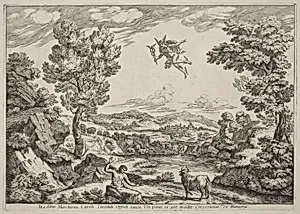
Created in 1696, *Balthus Turned to Stone* is an etching by the Italian artist Crescenzio Onofri. Measuring roughly 12½ by 17⅝ inches on the plate, the print captures a dramatic moment of transformation through precise line work and tonal contrast. Etching, a technique that uses acid to bite designs into a metal plate, allowed artists of the period to achieve intricate textures and atmospheric effects that were especially well suited to narrative subjects. Onofri’s choice of medium reflects the growing popularity of prints in the late seventeenth century, when etchings circulated widely across Europe and brought mythological or allegorical scenes into private collections. The evocative title suggests a story of petrification—perhaps drawn from classical legend—inviting viewers to consider themes of fate, stillness, and permanence rendered in the delicate yet durable medium of ink on paper. Today the impression resides in the National Gallery of Art’s collection thanks to the Ailsa Mellon Bruce Fund, preserving a fine example of Baroque-era printmaking for contemporary audiences.
About the Artist
Crescenzio Onofri · 1632–1712
Comment on works: Landscapes