
Baluster Vase with Women Performing the "Four Accomplishments" and Children in a Garden
Qing dynasty (1644–1911), Kangxi period (1662–1722)
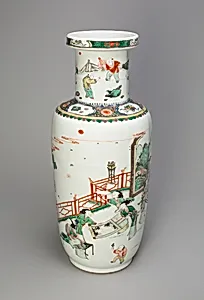
Medium
Porcelain with overglaze enamel decoration
Dimensions
43.8 × 19 cm (17 1/4 × 7 1/2 in.); Diam.: 19 cm (7 1/2 in.)
Classification
vase
Department
Arts of Asia
Museum
Art Institute of Chicago
Accession Number
72589
Rights
Public Domain
Art Historical Context
This elegant baluster vase, standing 43.8 cm tall, hails from the Kangxi period (1662–1722) of China's Qing dynasty, a golden era for porcelain production at the imperial kilns of Jingdezhen. Crafted from fine porcelain and decorated with vibrant overglaze enamels, its swollen, waisted form—typical of baluster shapes—served both as a decorative display piece and a symbol of refined taste in elite households. The vase's enchanting scene features women gracefully performing the "Four Accomplishments"—music, chess, calligraphy, and painting—surrounded by playful children in a lush garden setting. These pursuits, known as *si yi* in Chinese culture, embodied the ideal virtues of educated women, promoting harmony, intellect, and moral cultivation under Confucian ideals. Such domestic imagery celebrated familial prosperity and leisure, resonating with the Kangxi emperor's patronage of the arts. The overglaze enamel technique, applied after the initial high-fired glaze and low-fired for color vibrancy, allowed for intricate, multicolored details that captured the porcelain's translucency and durability. A testament to technical mastery, this vase from the Art Institute of Chicago's Arts of Asia collection endures as a window into 17th-century opulence and cultural elegance.
About the Artist
Unknown
The artist designated as "Unknown" in our virtual museum's collection exemplifies a poignant chapter in art history: creators whose identities have faded into obscurity despite the enduring power of their work. With only one known artwork attributed to them in our holdings, this figure represents countless anonymous hands that shaped visual culture across centuries. Museums worldwide, including th...