
Bamboo
printed 1922
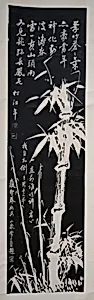
Medium
Hanging scroll of polychrome woodblock print; ink and color on paper
Dimensions
Image: 43 1/2 x 11 7/8 in. (110.5 x 30.2 cm) Overall with mounting: 68 1/2 x 16 1/2 in. (174 x 41.9 cm) Overall with knobs: 68 1/2 x 20 in. (174 x 50.8 cm)
Classification
Prints
Culture & Period
China · Modern period
Department
Asian Art
Museum
Metropolitan Museum of Art, New York, NY
Credit
Rogers Fund, 1924
Accession Number
CP257
Rights
Public Domain
Art Historical Context
Behold the elegant *Bamboo*, arome woodblock print created by Kuang Xü Song Jiang in 1922. This hanging scroll, measuring an impressive 43½ x 11⅞ inches in its image alone, captures the timeless grace of bamboo stalks swaying in an unseen breeze. Housed in the Metropolitan Museum of Art's Asian Art department (acquired via the Rogers Fund in 1924), it exemplifies Chinese printmaking during the modern period, bridging centuries-old traditions with early 20th-century innovation. Woodblock printing, a cornerstone of Chinese art since the Tang dynasty, reaches new heights here through polychrome techniques—multiple carved blocks layered with ink and vibrant colors on paper. This labor-intensive process allowed for rich tonal depth and subtle textures, rendering bamboo's slender leaves and resilient culms with lifelike vitality. The scroll format, complete with silk mounting and ivory knobs, invites vertical display, evoking the scholarly hanging scrolls of imperial China. In Chinese culture, bamboo symbolizes integrity, flexibility, and endurance—qualities revered by poets and artists alike. Printed amid China's turbulent Republican era, this work offers a meditative escape, reminding viewers of nature's quiet strength. A perfect gem for contemplating artistry's enduring legacy!
About the Artist
Kuang Xü|Song Jiang (Chinese|Chinese) · 1874 |1736 –1909 |1795
Chinese, 1874–1909|Chinese, Qing dynasty, Qianlong period (1736–1795)