
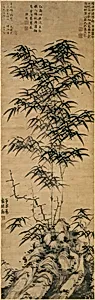
元 鄧宇 竹石圖 軸|Bamboo and rock
ca. 1360–67
Medium
Hanging scroll; ink on paper
Dimensions
Image: 53 3/16 x 16 5/8 in. (135.1 x 42.2 cm) Overall with mounting: 104 1/4 x 23 7/8 in. (264.8 x 60.6 cm) Overall with knobs: 104 1/4 x 27 1/8 in. (264.8 x 68.9 cm)
Classification
Paintings
Culture & Period
China · Yuan dynasty (1271–1368)
Department
Asian Art
Museum
Metropolitan Museum of Art, New York, NY
Credit
From the P. Y. and Kinmay W. Tang Family Collection, Gift of Oscar L. Tang, 1991
Accession Number
1991.438.1
Rights
Public Domain
Tags
Art Historical Context
Deng Yu's *Bamboo and Rock* (ca. 1360–67) is a hanging scroll painted in ink paper, exemplifying the refined literati tradition of the Yuan dynasty (12711368). Created during period of Mongol rule over China, when scholar-artists often retreated into nature-inspired themes to express personal integrity, this captures the elegance of bamboo swaying against a rugged rock. The monumental size—over 8 feet tall when fully mounted—makes it ideal for vertical display in a studio or scholar's hall, a common format for such scrolls that invited contemplation. In Chinese art, bamboo symbolizes resilience and moral uprightness, bending but never breaking in the wind, while the rock represents steadfastness. Deng Yu, a master of this motif, employs masterful ink techniques: layered washes for textured stone and fluid, calligraphic strokes for bamboo leaves and stems, creating a sense of vitality and harmony with nature. This painting, from the Tang Family Collection at the Metropolitan Museum of Art, reflects the Yuan era's emphasis on "literati painting," prioritizing expressive brushwork over realism. Visitors will appreciate how this scroll transports us to a serene garden retreat, embodying the enduring cultural reverence for nature's quiet strength in Chinese aesthetics.