
Band
Unknown Artist
17th–18th century
Medium
Silk, metal thread and linen (?); plain weave, brocaded
Dimensions
H. 3 1/2 in. (8.9 cm) W. 1 1/4 in. (3.2 cm)
Classification
Textiles-Woven
Department
Islamic Art
Museum
Metropolitan Museum of Art, New York, NY
Credit
Rogers Fund, 1909
Accession Number
09.50.2053
Rights
Public Domain
Tags
Art Historical Context
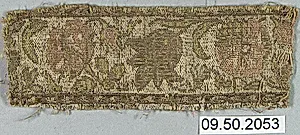
This delicate textile band, created by an unknown artist in the17th–18th, exemplifies the exquisite craftsmanship of Islamic weaving traditions. Measuring just 3½ by 1¼ inches, it is crafted from silk, metal thread, and possibly linen on a plain weave ground, enhanced by brocading—a sophisticated technique where supplementary weft threads float over the foundation to form raised, shimmering motifs. The floral patterns, hinted at in its tags, likely bloom with intricate detail, capturing the era's fascination with nature's beauty in stylized forms. Housed in the Metropolitan Museum of Art's Islamic Art department (acquired via the Rogers Fund in 1909), this band reflects the opulence of Ottoman, Safavid, or Mughal courts, where such luxurious trims adorned elite garments, turbans, or furnishings. Metal threads—often gold or silver—added a regal gleam, symbolizing wealth and status, while silk ensured durability and luster. Brocaded textiles like this were labor-intensive marvels, produced on specialized looms by skilled artisans. For visitors, this tiny treasure offers a window into everyday elegance of the Islamic world, where even a narrow band could transform the ordinary into the extraordinary. Pause to imagine it edging a silk robe, its flowers dancing in candlelight.