
Band
1476-1532
Dimensions
14.6 × 3.2 cm (5 3/4 × 1 1/4 in.)
Classification
textile
Department
Textiles
Museum
Art Institute of Chicago
Accession Number
85031
Rights
Public Domain
Art Historical Context
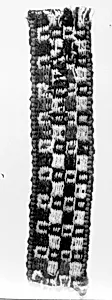
This exquisite Inca "Band," dating to the height of the Inca Empire (6–1532), a glimpse into one of the world's most sophisticated pre-Columbian textile traditions. a modest 14.6 × 3.2 cm (5 3/4 × 1 1/4 in.), this narrow strip likely served as a decorative edging, belt, or ritual accessory, reflecting the empire's vast Andean domain from modern-day Ecuador to Chile. Classified as a and housed in the Art of Chicago's Textiles department, it exemplifies Inca weaving mastery. Artisans employed camelid fibers (such as alpaca wool) in intricate tapestry techniques, achieving fine patterns with symbolic motifs that conveyed cosmology, status, and imperial power. Textiles were not mere cloth but vital currency, tribute items, and ceremonial treasures, underscoring the culture's technological and artistic prowess. Though the precise medium remains unidentified, this band's survival speaks to the enduring legacy of Inca craftsmanship, bridging daily life and spirituality in a civilization conquered by the Spanish in 1532. A small yet profound artifact!
About the Artist
Inca
Inca artists, operating anonymously within the vast Inca Empire from approximately 1425 to 1532 CE, were masterful creators whose works symbolized imperial power and unity across the Andes. Thriving in the heart of Cuzco, the empire's capital, these skilled artisans—men and women alike—produced textiles, ceramics, and metalwork that served both practical and ceremonial purposes. Gifted craftspeopl...