
Barbe
Unknown Artist
18th century
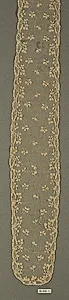
Medium
Needle lace, point d’Alençon
Dimensions
L. 33 x W. 3 3/4 inches 83.8 x 9.5 cm
Classification
Textiles-Laces
Culture
French
Department
European Sculpture and Decorative Arts
Museum
Metropolitan Museum of Art, New York, NY
Credit
Gift of Mrs. Edward Luckmeyer, 1906
Accession Number
06.690.12
Rights
Public Domain
Art Historical Context
Step into the opulent world of 18-century French fashion with *Barbe*, a exquisite example of needle lace crafted in the renowned point d’Alençon technique. This slender piece, measuring 33 inches long by 3¾ inches wide, was likely worn as a delicate lappet or neck accessory, adorning the elite with its airy elegance. Produced in Alençon, a hub of lace-making excellence, it exemplifies the era's decorative arts, where textiles rivaled paintings in prestige. Point d’Alençon lace, a pinnacle of needlework artistry, involves meticulously stitching fine linen threads to create patterns that mimic the denser bobbin lace—yet with unparalleled fluidity and detail. Patented under Louis XIV in the 17th century and refined through the Rococo period, this medium symbolized luxury and technical mastery, often reserved for royal courts and nobility. Its intricate motifs, though subtle here, would have showcased floral or geometric designs, demanding hours of skilled labor. Housed in The Metropolitan Museum of Art’s Department of European Sculpture and Decorative Arts, *Barbe* arrived as a generous gift from Mrs. Edward Luckmeyer in 1906. It invites us to appreciate how such fragile finery captured the refined tastes of Versailles-era France, bridging textile craft and high society.