
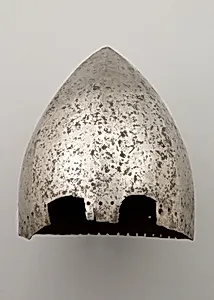
Bascinet
Unknown Artist
ca. 1325–50
Medium
Steel
Dimensions
H. 8 in. (20.3 cm); W. 7 1/2 in. (19.1 cm); D. 8 1/4 in. (21 cm); Wt. 2 lb. 6 oz. (1064 g)
Classification
Helmets
Culture
possibly Italian
Department
Arms and Armor
Museum
Metropolitan Museum of Art, New York, NY
Credit
Bashford Dean Memorial Collection, Funds from various donors, 1929
Accession Number
29.158.44
Rights
Public Domain
Art Historical Context
Step into the clangor of 14th-century battlefields with this exquisite bascinet, a helmet dating to around 1325–50, possibly crafted in Italy. Measuring just 8 inches high and weighing a nimble 2 pounds 6 ounces, its compact form—7½ inches wide and 8¼ inches deep—was designed for the mounted knight, balancing fierce protection with essential mobility. Worn over a chainmail coif and often paired with a protective aventail skirt of mail, the bascinet marked a pivotal shift from earlier crested helms to more streamlined designs that hugged the skull. Forged from high-quality steel, this helmet exemplifies the metallurgical mastery of medieval armorer workshops, where skilled artisans hammered and shaped metal to deflect blows while allowing clear vision and ventilation. Its possible Italian provenance hints at the Renaissance of armor-making in northern Italy, where craftsmanship rivaled painting and sculpture in precision and artistry. Emerging during the age of chivalric tournaments and wars like the early Hundred Years' War, bascinets like this one symbolized a warrior's status and the fusion of function with emerging plate armor technology. Today, housed in the Metropolitan Museum of Art's Arms and Armor Department as part of the Bashford Dean Memorial Collection, this survivor offers a tangible link to the valor and ingenuity of medieval Europe—reminding us that armor was as much art as defense.