
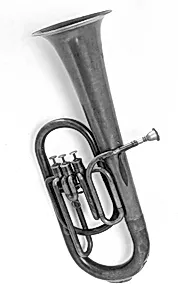
Bass Saxhorn in B-flat
1858–75
Medium
Brass, nickel-silver
Dimensions
L.: 74.5 cm (29-1/2 in.); Diam. of bell: 22.3 cm (8-7/8 in.)
Classification
Aerophone-Lip Vibrated
Culture
American
Department
Musical Instruments
Museum
Metropolitan Museum of Art, New York, NY
Credit
The Crosby Brown Collection of Musical Instruments, 1889
Accession Number
89.4.2180
Rights
Public Domain
Art Historical Context
Step into the brass-laden world of 19th-century American music with this Bass Saxhorn in B-flat, crafted by. I. Seefeldt between 1858 1875. Measuring an impressive 74.5 cm in length with a bell diameter of 22.3 cm, this lip-vibrated aerophone exemplifies the ingenuity of early industrial-era instrument making. Fashioned from gleaming brass and durable nickel-silver, it belongs to the saxhorn family—invented by Adolphe Sax in the 1840s—which revolutionized brass bands with its conical bore and valved design for smooth, melodic low tones. During the Civil War era and the Gilded Age, instruments like this bass saxhorn formed the backbone of regimental bands, parades, and community ensembles across America. Seefeldt, an American maker, contributed to a burgeoning domestic industry that adapted European innovations for Yankee workshops, blending functionality with ornate flair. Its presence in the Metropolitan Museum of Art's Crosby Brown Collection of Musical Instruments, acquired in 1889, underscores its role as both a playable artifact and a testament to cultural heritage. This piece invites visitors to imagine the resonant hum of marching bands echoing through city streets, highlighting how music intertwined with national identity in a young America. A true marvel of metallurgy and melody!