
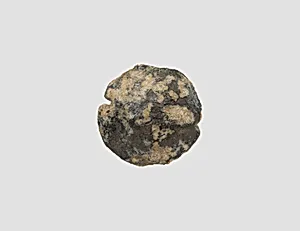
Bead
Unknown Artist
ca. 9th century BCE
Medium
Antimony
Dimensions
0.94 in. (2.39 cm)
Classification
Metalwork-Ornaments
Culture & Period
Iran · Iron Age II, Hasanlu Period IV
Department
Ancient Near Eastern Art
Museum
Metropolitan Museum of Art, New York, NY
Credit
Purchase, Mrs. Constantine Sidamon-Eristoff Gift, 1961
Accession Number
61.100.76
Rights
Public Domain
Art Historical Context
This delicate bead, crafted around the 9th century during Iron Age II in Iran's Hasanlu Period IV, offers a glimpse into the sophisticated metalworking of ancient Near cultures. Unearthed from the archaeological site of Hasanlu in northwestern Iran, it exemplifies the ornaments worn by the region's inhabitants, likely strung into necklaces or bracelets as symbols of status or personal adornment. At just 0.94 inches (2.39 cm) in diameter, its modest size belies the technological prowess of a time when iron tools were revolutionizing craftsmanship. Made of antimony—a rare, silvery-white metalloid prized for its luster and workability—this bead highlights innovative material choices in antiquity. Antimony, often sourced from local ores, was laboriously smelted and shaped, showcasing advanced pyrotechnology and an eye for aesthetic durability. In a period marked by cultural exchanges across the Near East, such beads bridged daily life and elite expression, reflecting trade networks that spanned from the Zagros Mountains to Mesopotamia. Today, this treasure resides in the Metropolitan Museum of Art's Department of Ancient Near Eastern Art, acquired through a generous gift in 1961. It invites us to ponder the lives of unnamed artisans whose tiny creations endure, whispering stories of resilience and beauty from over 2,800 years ago.