
Stud
Unknown Artist
ca. 9th century BCE
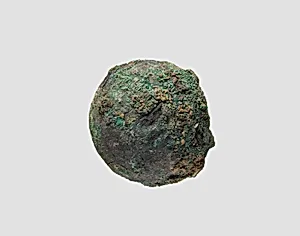
Medium
Copper, bronze
Dimensions
Diam. 2.2 cm x D. 1 cm
Classification
Metalwork-Ornaments
Culture & Period
Iran · Iron Age II, Hasanlu Period IV
Department
Ancient Near Eastern Art
Museum
Metropolitan Museum of Art, New York, NY
Credit
Purchase, Mrs. Constantine Sidamon-Eristoff Gift, 1961
Accession Number
61.100.131a
Rights
Public Domain
Art Historical Context
This diminutive bronze and copper stud, measuring just 2.2 cm in diameter and 1 cm deep, hails from Iron Age II Iran during the Hasanlu Period IV, the 9th century. Unearthed from the ancient site of Hasanlu—a thriving settlement in northwestern Iran—this small ornament exemplifies the exquisite metalwork of the Ancient Near East. Likely used to adorn clothing, furniture, or harnesses, its compact form reveals the precision craftsmanship of a culture skilled in alloying copper and bronze for durability and shine. In the turbulent world of Iron Age Iran, such artifacts highlight technological advancements and artistic sophistication amid regional powers like the Mannaeans and early Medes. The stud's creation involved sophisticated techniques like casting or hammering, producing a functional yet decorative piece that spoke to everyday elite life. Its survival offers a tangible glimpse into a period of cultural exchange and conflict, before Hasanlu's dramatic destruction. Today, this treasure resides in the Metropolitan Museum of Art's Department of Ancient Near Eastern Art, acquired through a generous purchase gift in 1961. A quiet testament to ancient ingenuity, it invites us to ponder the hands that shaped it millennia ago.