
Bead
Unknown Artist
8th–13th century
Medium
Glass; drilled
Dimensions
Diam. 1/2 (1.3 cm) W. 1/2 in. (1.2 cm)
Classification
Glass
Department
Islamic Art
Museum
Metropolitan Museum of Art, New York, NY
Credit
Rogers Fund, 1948
Accession Number
48.101.218
Rights
Public Domain
Art Historical Context
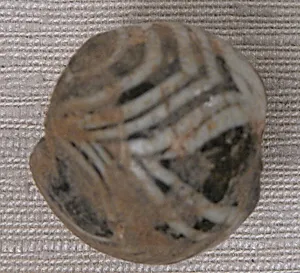
This unassuming glass bead, dating from the 8th to 13th century, hails from the vibrant world of Islamic art. Measuring just half an inch in diameter and width (1.3 cm by 1.2 cm), its petite form belies the craftsmanship of medieval artisans. Drilled through its center, it was designed for stringing into jewelry, amulets, or strings—common adornments in daily life across the Islamic world, from the Abbasid Caliphate to regional trade hubs. Crafted from glass, a medium prized for its versatility and luster, this bead exemplifies the sophisticated glassworking techniques of the era. Artisans likely shaped it via lampworking or molding before carefully drilling the perforation, allowing it to shine with translucency when worn or traded. Such beads were mass-produced in centers like Syria, Egypt, and Mesopotamia, facilitating extensive commerce along the Silk Road and Indian Ocean routes. Though simple, this bead offers a window into Islamic cultural exchange and everyday artistry. Acquired through the Rogers Fund in 1948, it now resides in the Metropolitan Museum of Art's Islamic Art department, reminding us that beauty often thrives in the smallest artifacts of history.