
Gaming Piece
Unknown Artist
possibly 8th–12th century
Medium
Glass
Classification
Gaming pieces
Department
Islamic Art
Museum
Metropolitan Museum of Art, New York, NY
Credit
Pfeiffer Fund, 1972
Accession Number
1972.9.15
Rights
Public Domain
Tags
Art Historical Context
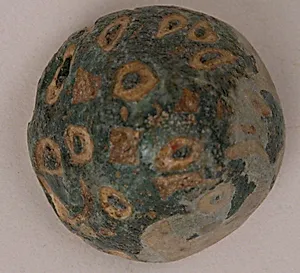
This delicate glass gaming piece, dating possibly to the 8th–12th, hails from the Islamic world and exemplifies the exquisite craftsmanship of medieval artisans. Crafted from glass—a medium in which Islamic workshops excelled—this small object was likely used in popular board games like backgam (known as *nard* in Arabic), a pastime enjoyed across social classes from Baghdad to Cordoba. Its survival speaks to the durability of glass, often molded or blown into vibrant, functional forms that blended utility with subtle artistry. In the Islamic Art department at the Metropolitan Museum of Art, acquired through the Pfeiffer Fund in 1972, this piece highlights gaming's cultural role in Islamic society. Games fostered strategy, socializing, and even intellectual pursuits, with references in literature from the Abbasid era. Glassmaking techniques, such as trailing colored threads or free-blowing, produced affordable yet elegant items for everyday use, reflecting broader innovations in Islamic decorative arts. Though the artist remains unknown, this gaming piece invites us to imagine lively gatherings in bustling medieval markets or palaces, where play met ingenuity—a timeless reminder of shared human joys across centuries.