
Bead
Unknown Artist
8th–13th century
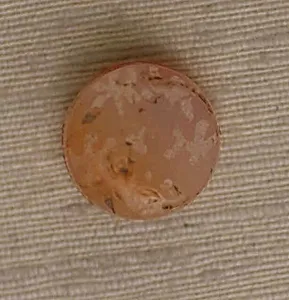
Medium
Stone or glass (?)
Dimensions
Ht. 1/4 in. (0.6 cm) Diam. 1/2 in. (1.3 cm)
Classification
Jewelry
Department
Islamic Art
Museum
Metropolitan Museum of Art, New York, NY
Credit
Rogers Fund, 1948
Accession Number
48.101.198
Rights
Public Domain
Art Historical Context
Nestled in the Islamic Art collection at The Metropolitan Museum of Art, delicate bead exemplifies the exquisite craftsmanship of the 8th–13th, a golden era of Islamic innovation and trade across the Middle East, North Africa, and beyond Crafted from stone or possibly glass by an unknown artisan, it measures just a quarter-inch high and half-inch in diameter—small enough to perch on your fingertip. Acquired through the Rogers Fund in 8, it whispers of everyday adornments worn by people from bustling bazaars to royal courts. Beads like this were essential components of jewelry, strung into necklaces, bracelets, and amulets that signified status, protection, or beauty. The uncertain medium highlights the resourcefulness of Islamic artisans, who mastered carving durable stone or molding vibrant glass, often imported via Silk Road networks. Techniques involved precise drilling and polishing, creating functional art that endured centuries. Though modest in scale, this bead reveals the cultural vibrancy of medieval Islamic societies, where personal ornaments blended utility with artistry. Pause to imagine it gleaming amid a cascade of jewels, a tiny testament to a world of skilled hands and far-flung exchanges.