
Bead
Unknown Artist
9th–19th century
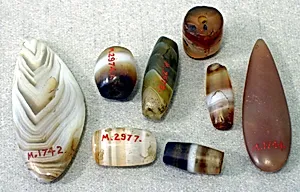
Medium
Agate
Classification
Jewelry
Department
Islamic Art
Museum
Metropolitan Museum of Art, New York, NY
Credit
Gift of Helen Miller Gould, 1910
Accession Number
10.130.2973
Rights
Public Domain
Art Historical Context
This exquisite agate bead, dating from the 9th to 19th century, offers a glimpse into the enduring artistry of Islamic jewelry-making. Crafted from agate—a banded chalcedony prized for its durability, translucency, vibrant natural patterns—the bead exemplifies the use of semi-precious stones in everyday ceremonial adornments across the Islamic world. Though created by an unknown artisan, its simple yet elegant form highlights the technical skill in polishing and shaping hardstone, a technique refined over centuries in regions from Persia to North Africa. In the context of Islamic art, such beads held both practical and symbolic value. They were often strung into necklaces, bracelets, or prayer beads (tasbih), serving as talismans for protection or aids in devotion. Agate's reputed properties—believed to ward off evil and promote clarity—added layers of cultural significance, reflecting the interplay of craftsmanship, spirituality, and trade along Silk Road routes. The broad date range underscores the continuity of these traditions through dynasties like the Abbasids, Fatimids, and Ottomans. A generous gift to the Metropolitan Museum of Art from Helen Miller Gould in 1910, this bead invites us to appreciate the subtle beauty of functional art. Though small, it connects us to the vibrant pulse of Islamic material culture, where everyday objects carried profound meaning.