
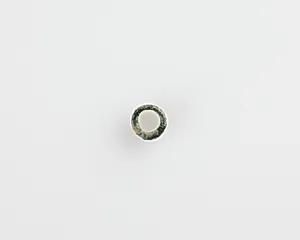
Bead
1550-1196 BCE
Classification
Jewelry and Ornament
Department
Smithsonian Collection
Museum
Smithsonian American Art Museum
Credit
Gift of Charles Lang Freer
Accession Number
F1909.1094
Rights
Public Domain
Tags
About this artwork
To 1909
Art Historical Context
This unassuming yet captivating glass bead hails from ancient Egypt's New Kingdom period (ca. 1550–1196 BCE), a golden age of imperial power, monumental architecture, and refined craftsmanship. Dating to around 1550–1196 BCE, it exemplifies the everyday artistry of a civilization renowned for its innovation in materials and adornment. As a piece of jewelry or ornament, such beads were strung into necklaces, bracelets, or amulets, serving both practical and protective roles in daily life and the afterlife. Crafted from glass—a material Egyptians pioneered around 1500 BCE—this bead highlights early mastery of glassmaking techniques, likely using core-forming methods where a clay core was coated with molten glass and later removed. Vibrant colors and intricate shapes made glass beads prized status symbols and trade goods, rivaling more precious stones like faience or lapis lazuli. Though small, it reflects the New Kingdom's cultural emphasis on beauty, symmetry, and eternity. Acquired by collector Charles Lang Freer by 1909, this bead entered the Smithsonian American Art Museum through his generous gift, preserving a tangible link to Egypt's ancient splendor. Visitors can appreciate how such humble artifacts reveal the ingenuity of a world-shaping culture.
About the Artist
Unknown
The artist designated as "Unknown" in our virtual museum's collection exemplifies a poignant chapter in art history: creators whose identities have faded into obscurity despite the enduring power of their work. With only one known artwork attributed to them in our holdings, this figure represents countless anonymous hands that shaped visual culture across centuries. Museums worldwide, including th...