
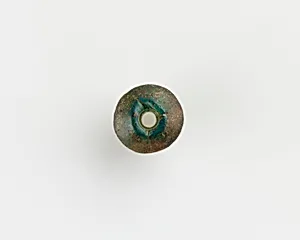
Bead
2nd-4th century
Classification
Jewelry and Ornament
Department
Smithsonian Collection
Museum
Smithsonian American Art Museum
Credit
Gift of Charles Lang Freer
Accession Number
F1909.1377
Rights
Public Domain
Tags
About this artwork
To 1909
Art Historical Context
This delicate glass bead, dating to the 2nd-4th century CE, hails from Roman Italy during the height of the Empire's expansion and cultural flourishing. As a simple yet elegant piece of jewelry and ornament, it exemplifies the everyday artistry of the Roman world, where glassmaking reached sophisticated levels. Romans perfected techniques like molding and blowing glass, producing affordable yet beautiful items for personal adornment, trade, and even amulets believed to ward off evil. Beads like this were ubiquitous in necklaces, bracelets, and hair ornaments, reflecting Rome's vibrant multicultural society—from bustling markets in cities like Rome to provincial workshops. Its vibrant hues and smooth form highlight the era's mastery of colored glass, often made from silica sand, natron, and metallic oxides for striking translucency. Acquired by collector Charles Lang Freer before 1909 and gifted to the Smithsonian American Art Museum, this bead offers a tangible link to antiquity. Part of the esteemed Freer collection, it invites us to ponder the lives of those who wore it, bridging millennia with quiet elegance.
About the Artist
Unknown
The artist designated as "Unknown" in our virtual museum's collection exemplifies a poignant chapter in art history: creators whose identities have faded into obscurity despite the enduring power of their work. With only one known artwork attributed to them in our holdings, this figure represents countless anonymous hands that shaped visual culture across centuries. Museums worldwide, including th...