
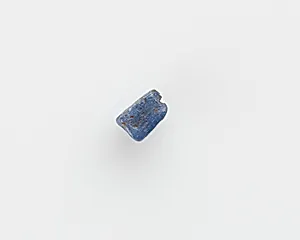
Bead
1550-1196 BCE
Classification
Jewelry and Ornament
Department
Smithsonian Collection
Museum
Smithsonian American Art Museum
Credit
Gift of Charles Lang Freer
Accession Number
F1909.1431
Rights
Public Domain
Tags
About this artwork
To 1909
Art Historical Context
This delicate glass bead, dating to Egypt's New Kingdom (ca 1550–1196 BCE), offers a glimpse into one of ancient history's most innovative civilizations. The New Kingdom marked a pinnacle of Egyptian power under pharaohs like Hatshepsut and Ramses II, when monumental architecture, elaborate tombs, and advanced technologies flourished. Glass, a material pioneered by Egyptian artisans around 1500, was rare and luxurious—far more precious than gold in some contexts—often reserved for elite jewelry and ornaments. Crafted during this era of artistic mastery, the bead exemplifies early glassworking techniques, likely formed by winding molten glass around a core or molding it into shape. Such beads adorned necklaces, amulets, and seals, serving both decorative and protective roles in daily life and the afterlife. Their vibrant colors and durability made them prized trade items across the Mediterranean. A highlight of the Charles Lang Freer collection, this piece was gifted to the Smithsonian American Art Museum by 1909, preserving a tangible link to ancient Egypt's ingenuity. Though small, it whispers of a world where beauty and symbolism intertwined in everyday elegance.
About the Artist
Unknown
The artist designated as "Unknown" in our virtual museum's collection exemplifies a poignant chapter in art history: creators whose identities have faded into obscurity despite the enduring power of their work. With only one known artwork attributed to them in our holdings, this figure represents countless anonymous hands that shaped visual culture across centuries. Museums worldwide, including th...