
Beads
Unknown Artist
ca. 9th century BCE
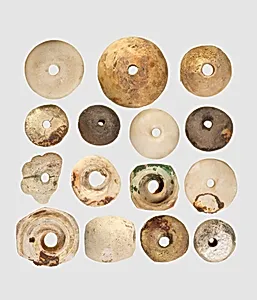
Medium
Stone, bone, shell, faience, Egyptian blue
Dimensions
13 7/8 in. (35.2 cm)
Classification
Stone-Ornaments
Culture & Period
Iran · Iron Age II, Hasanlu Period IV
Department
Ancient Near Eastern Art
Museum
Metropolitan Museum of Art, New York, NY
Credit
Purchase, Mrs. Constantine Sidamon-Eristoff Gift, 1961
Accession Number
61.100.109
Rights
Public Domain
Art Historical Context
Step into the world of ancient Iran with *Beads*, a striking necklace from the Iron Age II period (ca. 9th century BCE), specifically the Hasanlu Period IV.arthed from the archaeological site of Hasanlu in Iran, this 13⅞-inch (35.2 cm) strand the ornate personal adornments of a vibrant ancient culture. Acquired by The Metropolitan Museum of Art in1961 through a generous gift, it offers a tangible link to a time when powerful settlements thrived amid shifting empires. Crafted from an eclectic array of materials—stone, bone, shell, faience, and the vivid Egyptian blue—this ornament showcases masterful ancient techniques. Faience, a glazed ceramic-like material, and Egyptian blue, one of the world's first synthetic pigments originating in the Nile Valley, highlight sophisticated production methods and likely long-distance trade networks across the Near East. The beads' varied textures and colors would have caught the light, symbolizing wealth, status, or spiritual significance in daily or ceremonial life. These ornaments remind us of the artistry in everyday beauty during Iran's Iron Age, a era of iron tools, fortified cities, and cultural exchange. Gaze closely to imagine them gracing the neck of an elite figure from Hasanlu's bustling world.