
Beauty
Unknown Artist
18th–19th century
Medium
Hanging scroll; ink and color on paper
Dimensions
27 7/16 x 8 1/2 in. (69.7 x 21.6 cm)
Classification
Paintings
Culture & Period
Japan · Edo period (1615–1868)
Department
Asian Art
Museum
Metropolitan Museum of Art, New York, NY
Credit
Gift of Mrs. Henry J. Bernheim, 1945
Accession Number
45.97.3
Rights
Public Domain
Tags
Art Historical Context
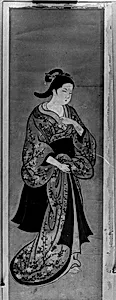
"Beauty," an exquisite hanging scroll from Japan's Edo period (16151868), captures the elegance of feminine grace through delicate ink and color on paper. Created by an unknown artist in the 18th or 19th century, this measures 27 7/16 x 8 1/2 inches and exemplifies traditional Japanese painting techniques. Hanging scrolls like this were designed for display in homes or alcoves, unrolled for contemplation during tea ceremonies or special occasions, blending artistry with ritual. During the Edo era, a time of relative peace and urban flourishing, images of beautiful women—known as *bijin-ga*—celebrated idealized beauty amid the rise of merchant culture and woodblock print traditions like ukiyo-e. Though the artist remains anonymous, the use of vibrant mineral colors and fluid ink washes highlights masterful control, evoking poise and subtlety. This piece reflects cultural values prizing harmony, refinement, and the transient allure of youth. Now housed in the Metropolitan Museum of Art's Asian Art Department, thanks to a 1945 gift from Mrs. Henry J. Bernheim, "Beauty" invites visitors to ponder timeless ideals of allure in Japanese art.