
Beckmann Sketchbook 9
1915-1916
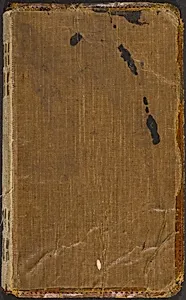
Medium
sketchbook with 23 sketches in graphite, pen and black ink, and colored pencil on lined paper. Sketchbook contains 45 blank pages and 89 pages of artist's notations; some sketches are dated.
Dimensions
book: 15.2 x 9.5 x 1 cm (6 x 3 3/4 x 3/8 in.)
Classification
Volume
Department
CG-W
Museum
National Gallery of Art, Washington, D.C.
Credit
Gift of Mrs. Max Beckmann
Accession Number
1984.64.50.1-23
Rights
Public Domain
Art Historical Context
**Beckmann Sketchbook 9** (1915–1916) offers a rare, intimate glimpse into the mind of Max Beckmann, of the 20th century's most intense Expressionist artists. Created during the harrowing early years of World War I when Beckmann served in the German medical corps and later suffered a mental breakdown, this pocket-sized volume captures his raw observations and ideas amid personal and global turmoil. At just 15.2 x 9.5 x 1 cm, it was perfectly portable, reflecting the artist's need to document fleeting thoughts on everyday lined paper. The sketchbook features 23 dynamic sketches executed in graphite, pen and black ink, and colored pencil, alongside 89 pages of notations—some dated—and 45 blank pages hinting at unfinished inspirations. Beckmann's bold, angular lines and vivid color accents foreshadow his mature style, blending distorted forms with psychological depth, influenced by Cubism and his own wartime visions. A generous gift from Mrs. Max Beckmann to the National Gallery of Art, this volume reveals the artist's creative process as both visual poetry and personal diary. For visitors, it's a poignant reminder of how turmoil fuels genius, bridging Beckmann's inner world with the chaos of history.
About the Artist
Max Beckmann · 1884–1950
Max Carl Friedrich Beckmann (1884-1950) stands as one of the most significant German painters of the twentieth century, a complex artist who bridged Expressionism and the New Objectivity while forging a deeply personal visual language. Born in Leipzig into a middle-class family, Beckmann's artistic journey spanned from academic classicism through the traumatic crucible of World War I to a mature s...