
Bell
Unknown Artist
10th–16th century
Medium
copper
Dimensions
Overall: 6 x 3cm (2 3/8 x 1 3/16in.)
Classification
Idiophone-Shaken-crotal bell
Culture & Period
Aztec · Late Postclassic (Pre-Columbian)
Department
Musical Instruments
Museum
Metropolitan Museum of Art, New York, NY
Credit
The Crosby Brown Collection of Musical Instruments, 1889
Accession Number
89.4.1952
Rights
Public Domain
Art Historical Context
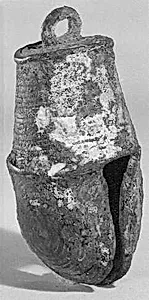
This delicate copper crotal bell, crafted by an unknown Aztec artist during the Late Postclassic period (roughly 1200–1521), represents a sophisticated example of pre-Columbian musical craftsmanship. Measuring just over two inches tall, the small shaken idiophone would have produced a bright, rattling sound when moved, thanks to its enclosed pellet design. Such bells formed part of the rich sonic world of Aztec society, where sound played a vital role in rituals, dances, and ceremonies honoring deities. Metallurgy held deep cultural importance among the Aztecs, and copper objects like this bell demonstrate their technical skill in working metals long before European contact. Likely worn on clothing, ankles, or ritual objects, these instruments helped create layered rhythms during processions and sacred performances. Its presence in the Metropolitan Museum’s Crosby Brown Collection highlights how even modest artifacts can reveal the central place of music in Mesoamerican life. As a surviving fragment of Aztec material culture, the bell offers visitors a tangible connection to a complex civilization whose artistic and spiritual traditions continue to resonate today.