
Belt
Unknown Artist
second half 17th century
Medium
Silver gilt, enamel, pearls, and colored stones.
Dimensions
H. 4.1 cm, W. 28 cm.
Classification
Jewelry, Precious Metals and Precious Stones
Culture
Transylvanian
Department
Robert Lehman Collection
Museum
Metropolitan Museum of Art, New York, NY
Credit
Robert Lehman Collection, 1975
Accession Number
1975.1.2495
Rights
Public Domain
Art Historical Context
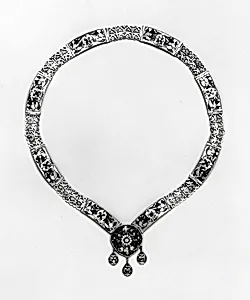
Step into the opulent world of 17th-century Transylvania with this exquisite belt from the Robert Lehman Collection the Metropolitan Museum of Art.ed in the second half of the 1600s by an unknown artist, jewelry masterpiece measures a slender 28 cm wide and 4.1 cm high, designed to accentuate the waist with regal flair. Its lavish materials—silver gilt for a golden sheen, vibrant enamel for colorful patterns, lustrous pearls, and sparkling colored stones—speak to the era's mastery of luxury craftsmanship, where every element was chosen to dazzle. Transylvania, a cultural crossroads between Eastern and Western Europe under Habsburg and Ottoman influences, produced such treasures as symbols of wealth and status among nobility. Belts like this were not mere accessories but statements of identity, often worn at courtly events or ceremonies. The intricate enameling technique, fusing powdered glass to metal through firing, allowed for durable, jewel-like designs that captured light and narrative motifs, blending technical precision with artistic splendor. Today, this belt invites us to marvel at Transylvania's forgotten jewelers, whose work rivals the grandest European courts. A highlight of the Robert Lehman Collection (acquired in 1975), it reminds visitors of how personal adornments encapsulated a vibrant, multicultural heritage.